Acid plant Services
Catalyst Screening
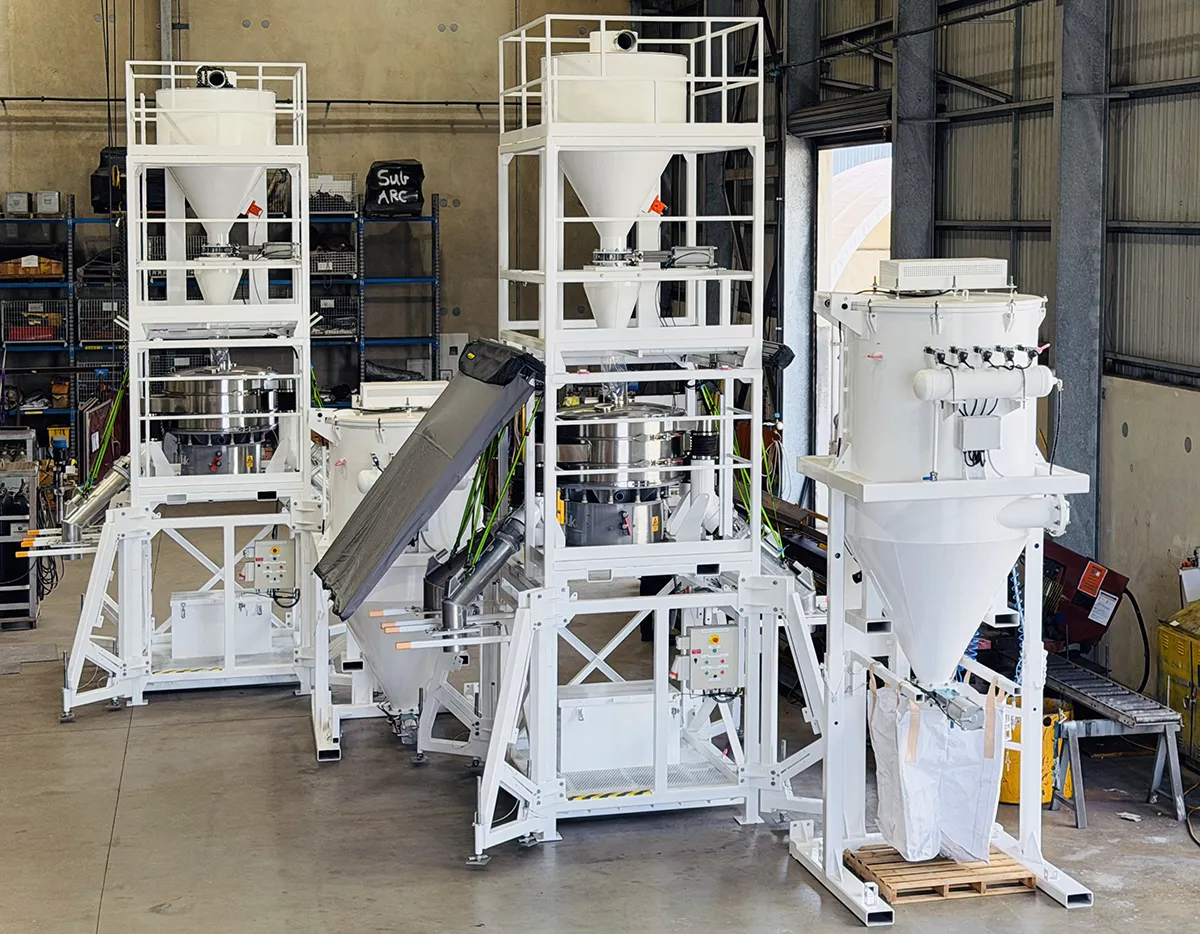
APMS provides a complete in‑house package for catalyst screening, handling and converter loading for sulphuric acid plants.
Our crews run equipment that we have designed, built and maintained ourselves in Western Australia, so we know exactly how it behaves on site and how to keep it working through a shutdown.
The aim is simple: move large volumes of catalyst and inert media safely, gently and efficiently, while giving our clients confidence that the converter will go back online with well built beds and clean, tidy work areas.
Catalyst Screening
Australian designed and built equipment

Every major component in our catalyst handling spread has been engineered, fabricated and assembled in Australia under APMS control. The gear has been developed off the back of real shutdown experience at local and overseas plants, and it reflects the way work is actually done on site.
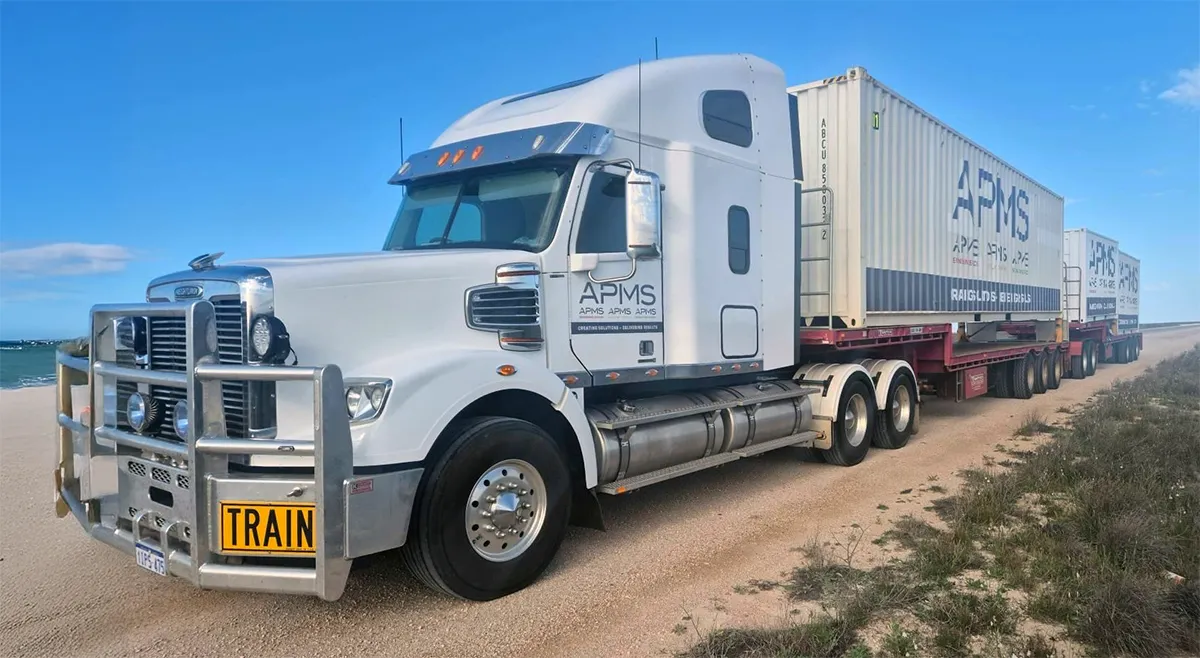
The units are set up for harsh, remote conditions, long hose runs and the stop‑start nature of shutdown work. They are built to meet Australian safety expectations around guarding, access, isolation and working at height, and they are sized so they travel cleanly within local transport limits without awkward permit loads.
We keep the design philosophy straightforward: solid structure, simple layouts, good access and minimal fuss. Standard components and sensible routing mean that maintenance and fault finding can be carried out by site crews and local trades, without waiting on specialist OEM technicians.

Equipment Overview
Our typical catalyst handling package for a shutdown is made up of the following key elements:
- Twin continuous screening towers, each designed for high throughput with gentle handling of catalyst and inert media.
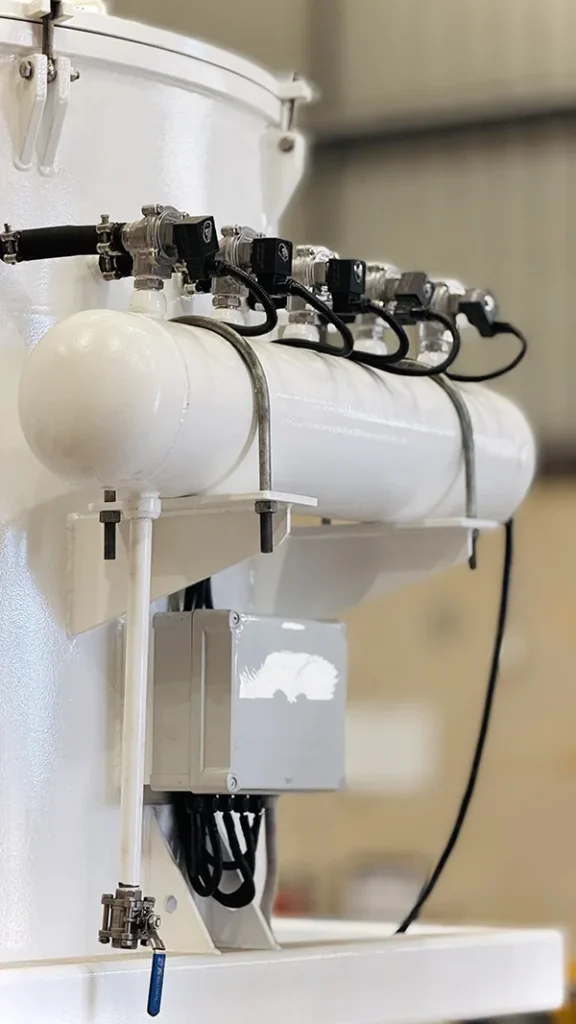
- Diesel powered vacuum units up to 330hp and 5000CFM with our in house designed continuous duty reverse jet self-cleaning baghouse filtration system to control dust at key transfer points.
- Pneumatic loading pots capable of loading 2 x 1500L bags at a time for rebuilding converter beds at the required profiles and densities in half the time of some of our competitors.
- Manual loading conveyors for areas where pneumatic loading is not practical or where access is tight.
- Smooth rubber‑lined suction and loading hoses, inspected before every job to reduce attrition and avoid blockages.
- A containerised tooling and spares package with all hoses, fittings and purpose‑made tools needed for a clean, tidy setup.
- Maintenance staff onsite to minimize any potential downtime due to breakdowns or onsite calibration needs. Because we designed and built them, we know how to fix them!
Catalyst Screening
Bespoke mobilisation and setup systems
Mobilisation and demobilisation can make or break a tight shutdown schedule, so we have put a lot of effort into the way the gear goes together.
The towers, cyclones and support frames are built as modular units with standard lifting points and connection details. Hose packages are pre‑cut, pre‑labelled and bundled in a way that matches our layout drawings. Electrical and pneumatic connections use repeatable patterns so crews know what they are looking at the moment they step onto the platform.
Containerised tooling, clearly marked spares and simple, repeatable rigging plans all help to shorten setup and pack‑up times. The end result is less time waiting for gear to be ready, and more time actually moving catalyst.
Catalyst Screening
Built for Australian conditions and maintenance
The equipment has been laid out with operators and maintainers in mind. Walkways, platforms and access points are positioned so that valves, drives, screens and filters can be reached safely without awkward climbing or over‑reaching. Clear labelling and consistent layouts mean that once a crew has worked on one setup, the next job feels familiar
We favour robust, off‑the‑shelf parts that can be sourced in regional Australia. Motors, gearboxes, valves and instrumentation are chosen with local support in mind. Hoses and cabling are routed so they can be inspected and replaced without stripping half a structure apart.

This approach keeps downtime to a minimum. When something does need attention during a shutdown, the fix is usually straightforward: isolate, swap the part, test and get back to work.
Catalyst Screening
Integrated screening and loading process
Our process for a typical converter shutdown follows a clear, repeatable sequence that has been refined over multiple campaigns
Before we arrive on site, we work with the client to understand converter design, catalyst types and volumes, access constraints and any lessons from previous shutdowns. From there we develop screening and loading plans, JSAs and layout drawings tailored to the plant.
Unloading is carried out using controlled vacuum. Hose runs are set up with smooth slopes and minimal free‑fall to reduce catalyst breakage and avoid segregation between layers. Product is drawn into the cyclones, where it is transferred into the screening towers.

The screening towers separate fines, broken pieces and tramp material from reusable catalyst. Screen meshes are selected to suit the catalyst types on the job, and we can configure different meshes if required. Good catalyst is collected in holding vessels ready for loading.
Converter beds are rebuilt using a mix of pneumatic loading pods and manual loading chutes. This allows us to rebuild each layer to the specified depth and density while keeping a close eye on profile and gas distribution.
At the end of the job, we record volumes, bed profiles and observations about catalyst condition. This information is bundled into a close‑out report that feeds into planning for the next campaign.
Catalyst Screening
Safety, environment and material stewardship
Safety and housekeeping are built into the way the spread operates. Dust is managed
through baghouse extraction at the cyclone inlet, screen discharge, loading pods and hand‑held loading guns inside the converter. This improves visibility for the crew and keeps surrounding work areas cleaner.
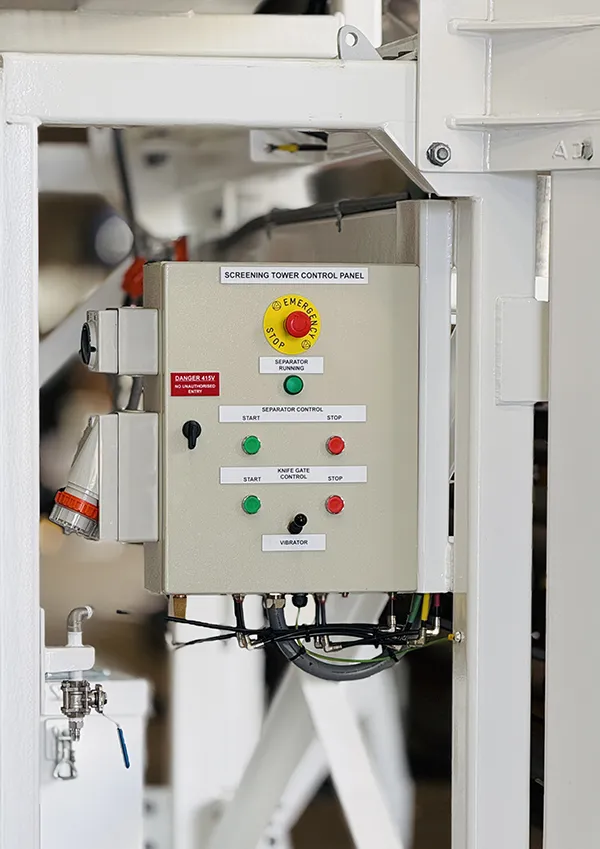
Guarding, interlocks and clearly laid out control panels support safe operation. Isolation points are obvious and accessible, and operating controls are grouped logically so the crew can see at a glance what is running and what is isolated.
We also treat catalyst and inert media as valuable materials rather than simple waste. Fines, waste streams and sound catalyst are segregated and tracked in line with client and regulatory requirements.

Catalyst Screening
Experience and shutdown performance
APMS has delivered catalyst screening and loading campaigns for a range of sulphuric acid plants, both within Australia and overseas. Across these jobs we have screened and reloaded large volumes of catalyst and inert media, often under tight shutdown windows and in busy workfronts.
Because we own the equipment and design the setups ourselves, we can bring the same core spread to each site while still tweaking the details to suit the plant.
Crews benefit from working with familiar gear, and clients benefit from consistent methods and predictable outcomes.
For our customers, the value is straightforward: clean, tidy work, reliable equipment, beds rebuilt the way they should be, and a converter ready to go back into service on schedule.